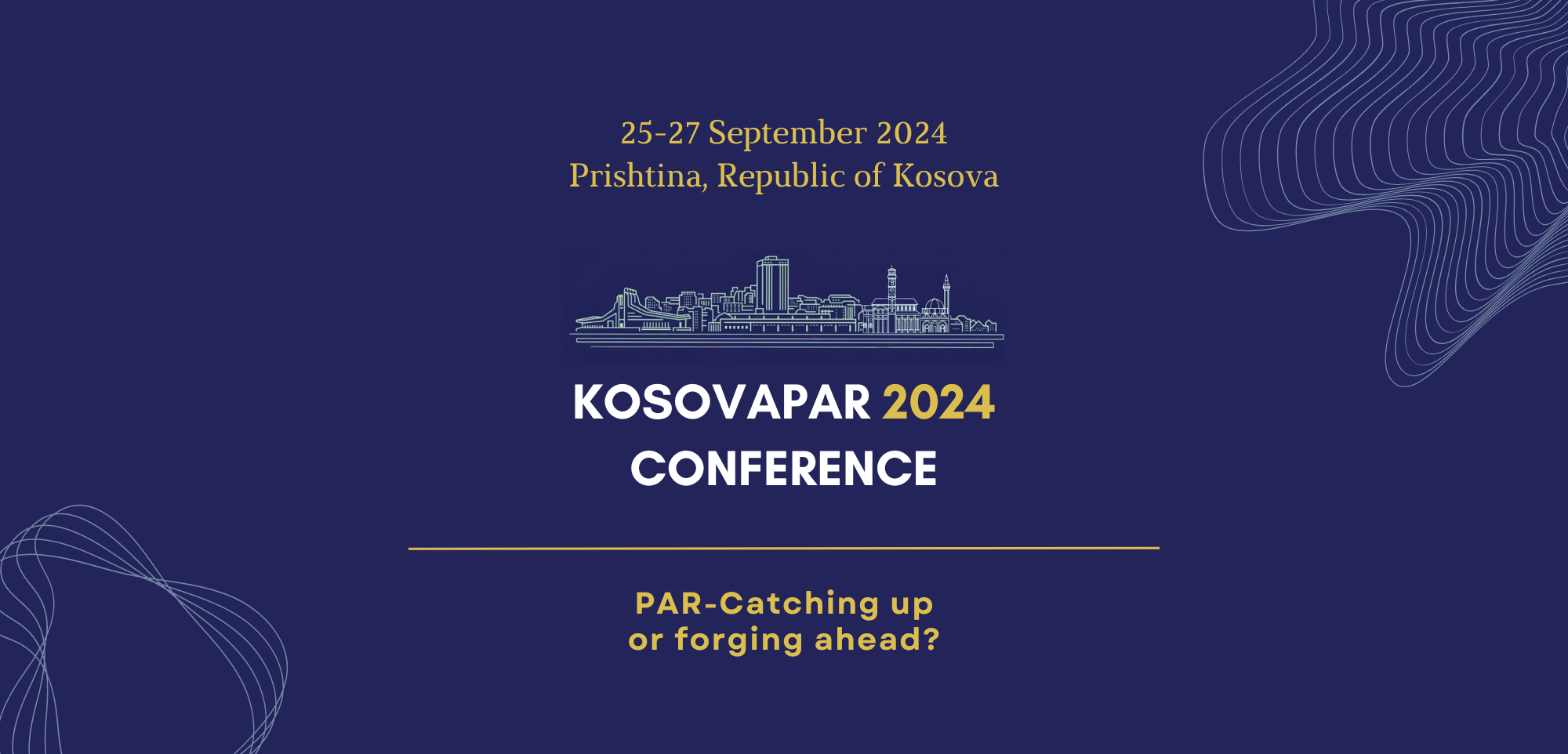
The KosovaPAR 2026 Conference theme “Public Value and the Common Good” invites scholars, practitioners, civil servants, and students from across the world to engage in a critical exploration of how public administration creates, sustains, and protects the value that serves society as a whole. In an age marked by global turbulence, ranging from democratic backsliding and conflict to rapid technological shifts and growing inequality, rethinking the purpose and practice of governance has never been more crucial.
Public administration today operates within profoundly complex environments. Traditional efficiency-driven models are giving way to new demands for legitimacy, trust, and ethical stewardship of collective resources. Citizens increasingly expect administrations not only to deliver services but also to embody shared societal values: fairness, transparency, accountability, and justice. The concept of public value therefore reemerges as a guiding principle, linking policy, performance, and the moral foundations of governance. When intertwined with the idea of the common good, it calls for governments and institutions to rethink their roles in fostering inclusive and sustainable communities.
The concept of public value extends beyond the simple delivery of outputs. It encompasses the outcomes that improve life for citizens and strengthen democratic relationships between the state and society. Public managers are called upon not only to manage resources efficiently but to engage citizens in defining what “value” means for their communities. Public value creation thus relies on participatory governance, co-production, and policy innovation that reflect collective aspirations rather than isolated bureaucratic goals. It challenges both scholars and practitioners to examine and redefine the ethical and institutional conditions under which public value can best flourish.
At the heart of such considerations lies the notion of the common good. A central debate concerns how public administration can define, measure, and operationalize public value across vastly different governance contexts- from established democracies to transitional states to non-democratic regimes, while determining whose voices are legitimately included in shaping collective priorities. While historically rooted in philosophical and religious traditions, the common good presents a living, evolving concept in public administration. It refers to the shared interests, conditions, and values that enable societies and communities to thrive collectively. Yet, defining and operationalizing the common good remains a contested task. Whose voices are included in determining what is common? How can public institutions balance competing interests and unequal power relations? How can policymakers pursue collective welfare in an increasingly privatized and data-driven world?
The conference seeks to bridge theoretical insight and practical experience by encouraging dialogue between academics and practitioners. It aims to bring forward comparative perspectives and innovative frameworks that illuminate how governments and public institutions can build public value while safeguarding the common good across diverse political, social, and cultural contexts. In doing so, it calls attention to the balance between accountability and innovation, efficiency and equity, as well as national and global commitments to sustainable governance.
Participants are encouraged to analyse real-world examples where public value creation has transformed governance processes through participatory budgeting, digital democracy platforms, open government initiatives, or community-driven service design. Equally, the theme invites critical reflection on failures and tensions: the commodification of public services, growing distrust in institutions, and the capture of policy spaces by private or partisan interests. By examining both successes and shortcomings, the conference hopes to foster constructive debate on how public administration can renew its moral and civic mission in the 21st century.
The theme emphasizes inclusive dialogue and knowledge exchange among decision-makers, civil servants, researchers, students and non-governmental actors. By creating a platform for diverse insights, the event aspires to strengthen the global community of practice dedicated to advancing ethical, resilient, and people-centred public administration. In doing so, it affirms the essential role of the public sector as both a creator and guardian of value for all.